Everything you need to know before your first wave
Fuerteventura – the „Hawaii of Europe“. The island is a true paradise for surfers and the perfect place to realize the dream of surfing the waves. But the power of the Atlantic always requires respect and, above all, knowledge, no matter which coast you start your adventure from.
As pioneers who have been living and teaching surfing on this island since its inception, we want to give you the most important knowledge. This guide is our contribution to your safety and enjoyment – so that your first wave on Fuerteventura will not just be a vacation photo, but the beginning of a true passion.
1. Not without my warm-up: Preparing your body for the wave
This is the most underestimated, but most important part of any surfing session. Surfing is a full-body sport that uses muscles you might not even know you have. Jumping into the water cold is not only the fastest way to get injured, but it also slows your progress as a surfer. A good warm-up prepares your muscles, improves your mobility, and sharpens your focus.
Two essential exercises that every beginner should do:
- The torso twist: Stand hip-width apart in the sand, knees slightly bent. Extend your arms to the sides and slowly and controllably rotate your upper body from left to right. This activates the core muscles you need for stability and the turns on the board.
- The dry takeoff on the beach: This is the most important exercise of all. Lie down on your board in the sand. Paddle a few strokes with your arms. Then, in a flowing motion, place your hands under your chest and jump into the surfing position. Repeat this 5-10 times to anchor the movement sequence in your muscle memory before you get wet at all.
2. Safety first: Understanding the currents
This is the most important lesson, whether you surf in the north or south. Currents (ripples or rip currents) often form on the sandy beaches of Fuerteventura.
- What is a current? Imagine the waves constantly pushing water towards the beach. This water has to flow back into the sea. It does so in channels – the currents. A current doesn’t pull you under the water, but out into the open sea.
- How do I recognize a current? Look for places where no waves break or where only a few waves break. The water there often looks calmer, darker, or agitated, like a river flowing into the sea.
- What do I do if I get into trouble? The golden rule: Never swim against the current! You will only be wasting your strength. Instead, swim parallel to the beach (to the left or right) out of the current and then use the waves to help you wash ashore again.
3. Proper technique: The difference between „holidaymakers“ and „surfers“
You’ll see many surf schools that promise quick success. Often, they teach a „tourist takeoff“ over the knees or in several steps. The problem: This technique only works in clear water and blocks your entire further development.
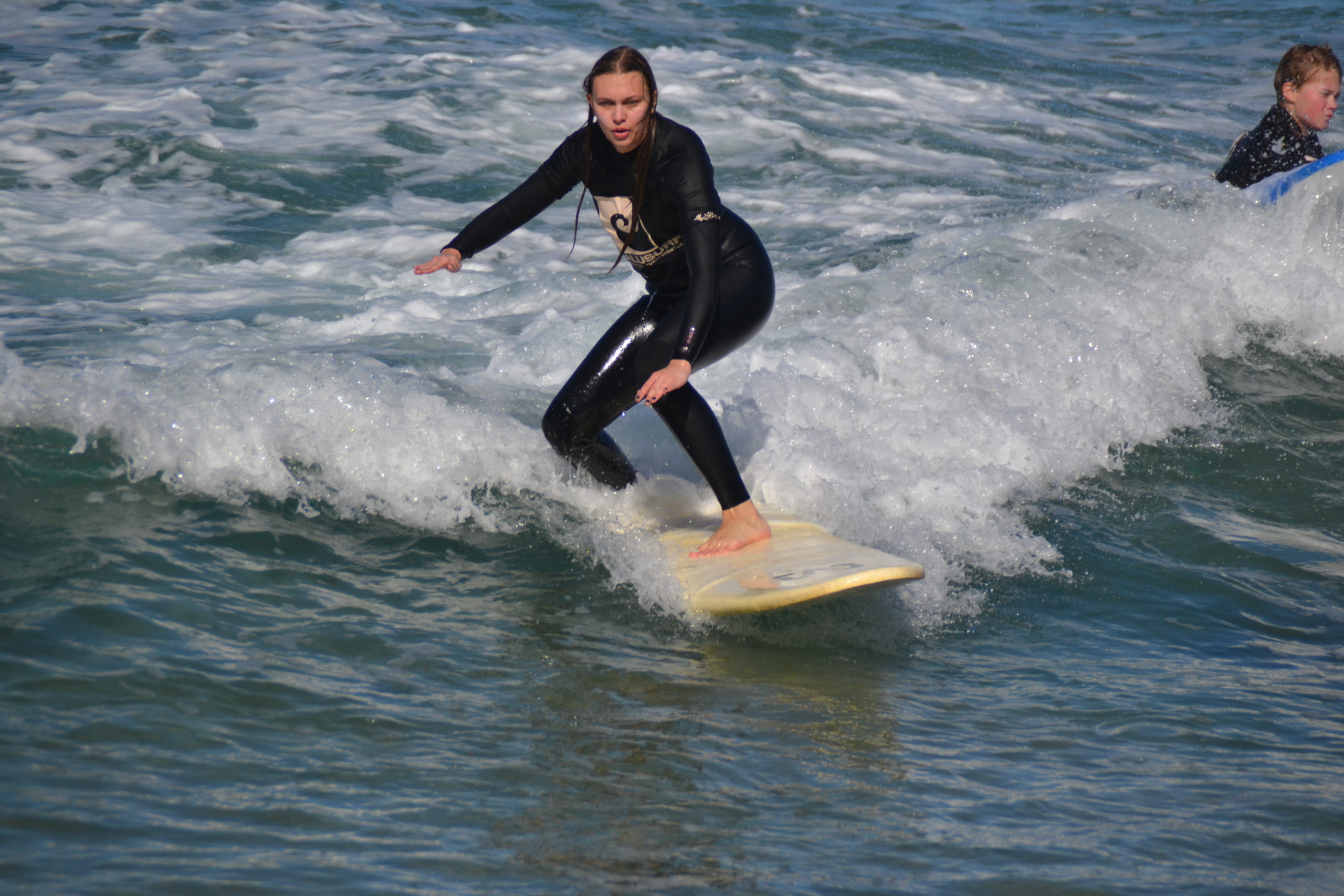
From the very first minute, we teach the one true take-off in a flowing motion. It may be more challenging at first, but it is the foundation you need to surf real, green waves later on. It is the difference between saying after your vacation, „I stood on a board“ or „I learned how to surf.“.
4. The right material & the most important rule
- Your board: For beginners, there is only one right choice: a large one. Softboard (a surfboard with a soft surface). It is stable, helps you catch waves easily and minimizes the risk of injury.
- The rule: Even though the beaches are extensive, there is one universal rule: The surfer who is closer to the breaking part of the wave (the peak) has priority. Respect this rule, and you will receive respect in return.
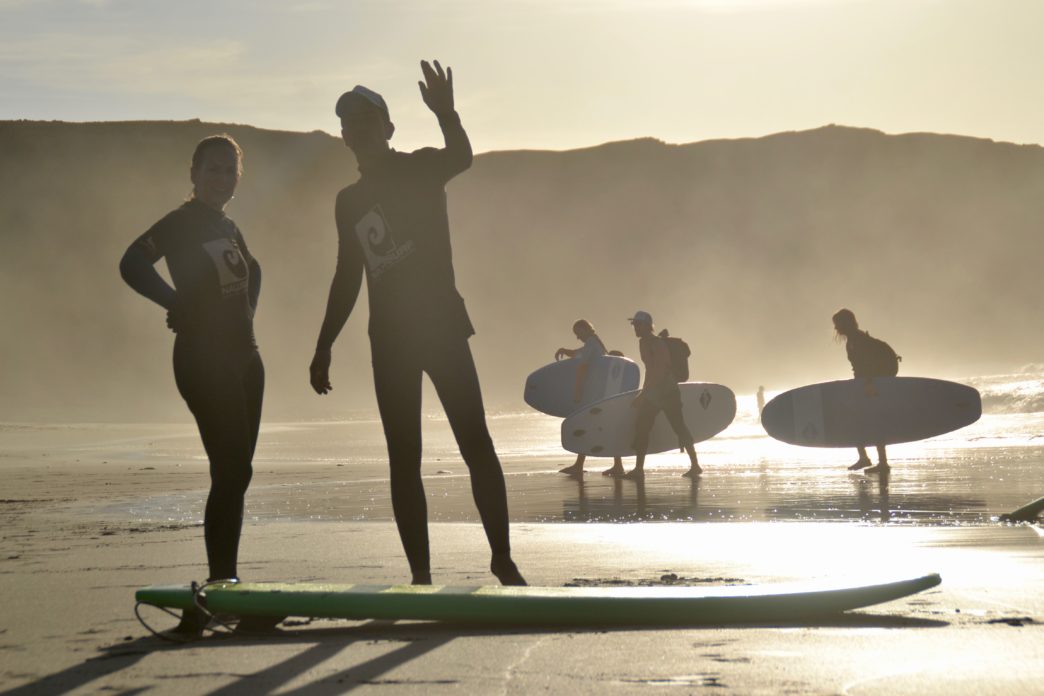
Conclusion: Knowledge is the key, a coach the door
With this knowledge, you are well prepared for your adventure in Fuerteventura. You understand the basics that will make you safer and accelerate your learning success.
The fastest and safest way to apply this knowledge in practice, however, is always with the help of an experienced coach. He or she will show you the intricacies of the conditions on that very day, correct your technique directly in the water, and ensure that you ride your first wave with a huge smile on your face.
Are you ready to put the theory into practice?